The tension between craft and capitalism
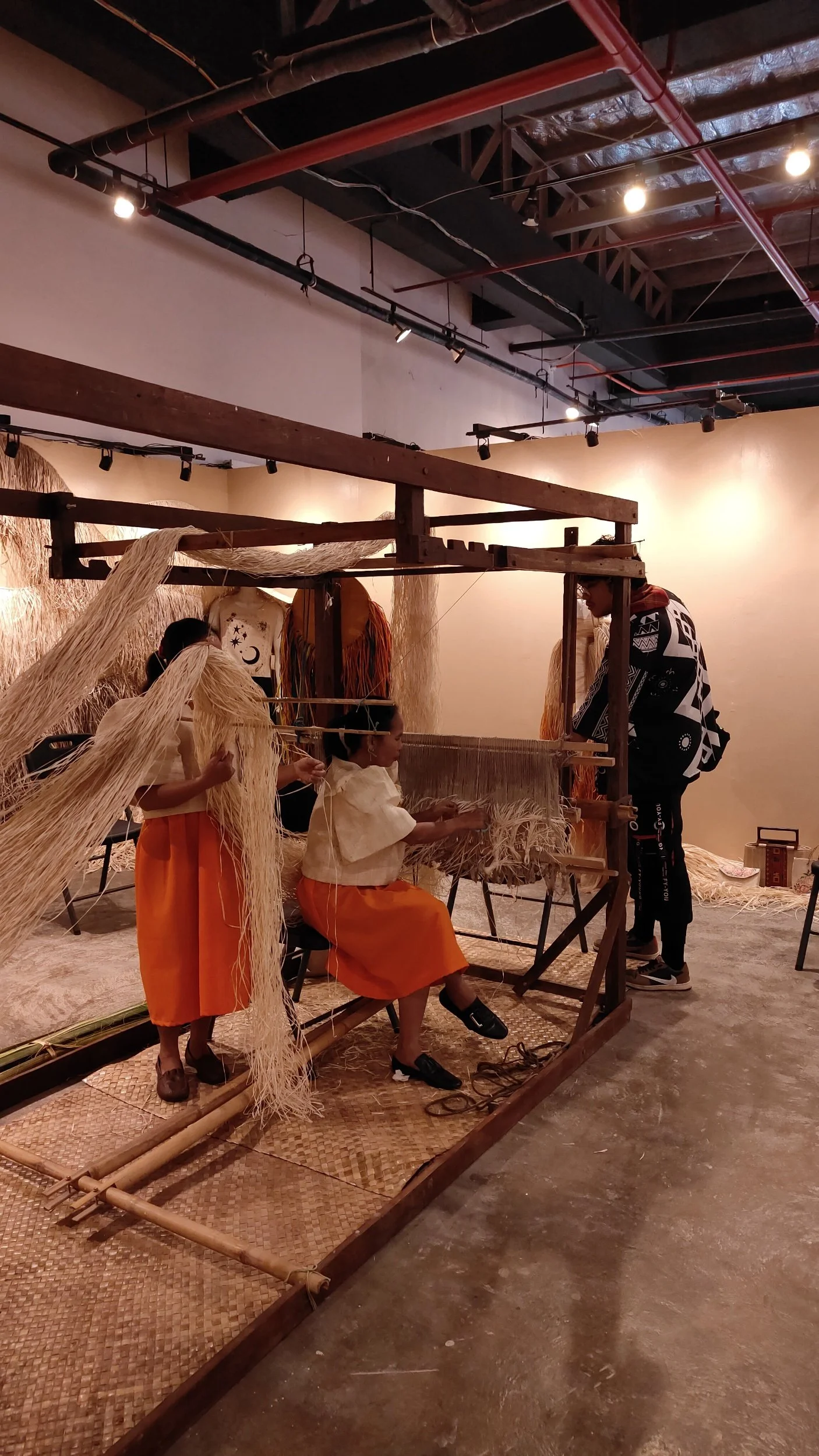
Women weavers from Bohol at the recent Visayas Art Fair 2025, showing their loom to RM
For most artists and creatives that I’ve met, there is a certain pain that comes with pricing our output.
With Balay Kasamtangan particularly, we find it devastating that dependency on paper currency necessitates us to put up a paywall. For me (Nikki), culture is not meant to be gatekept. Wisdom and knowledge should flow freely between people so that we may all collectively move forward and upward towards a better existence. My partner (RM), thinks differently since the history of Mindanao shows a bloody trail. Communities have long been exoticized and exploited; their heirloom items taken from them and separated from their ancestral domain by a simple piece of paper in a system they did not agree to. Of course they are skeptical and distrusting.
To feed our communities and ourselves, we have to put a price tag on items I would gladly share for free. We are told not to apologize, that we must take up space, but we find this sentiment too rooted in the Individualist philosophy of the West. Naturally, as a communal culture, we do mind if we take up space. We have to be conscious of who we affect, because it is the unconsciousness (or perhaps deliberate ignoring of it) that we find ourselves in a world where the system does not care for our well-being.
Good work deserves a reward; we agree with that. Yet, reality is not so kind nor fair. As an artist and curator, I must master the capitalist system in order to shift the flow of currency towards the people who deserve it. These are families who only wish to feed their children and see them thrive in a competitive world.
Craft is slow. It needs attention to detail. Intricacy is born from the loving eye of its craftsman.
Capitalism requires speed and scale. You must “hack”, “disrupt”, find the “NUKE” point as I recently learned in an accelerator we joined this year.
So how does one balance these polarities? To honor the time and energy given to a well-made item, the price tag goes up to offensive heights, as critiqued by those who align with the mission but find themselves unable to afford it.
There is an excellent reel we discovered by a Indian perfumer and anthropologist named Giti Datt who explains this tension elegantly, and expounds how the current capitalist production method adulterates quality. Simultaneously, one cannot blame those who critique these high price tags because it is painful to desire something and find yourself unable to fulfill it.
We do not have a solution to the true root of this challenge, as all entrepreneurial programs require of us in order to “come up with our winning product”. Addressing systemic imbalance is a problem we certainly need to solve, but what is the cause of it?
