Post-colonial Tropical Futures
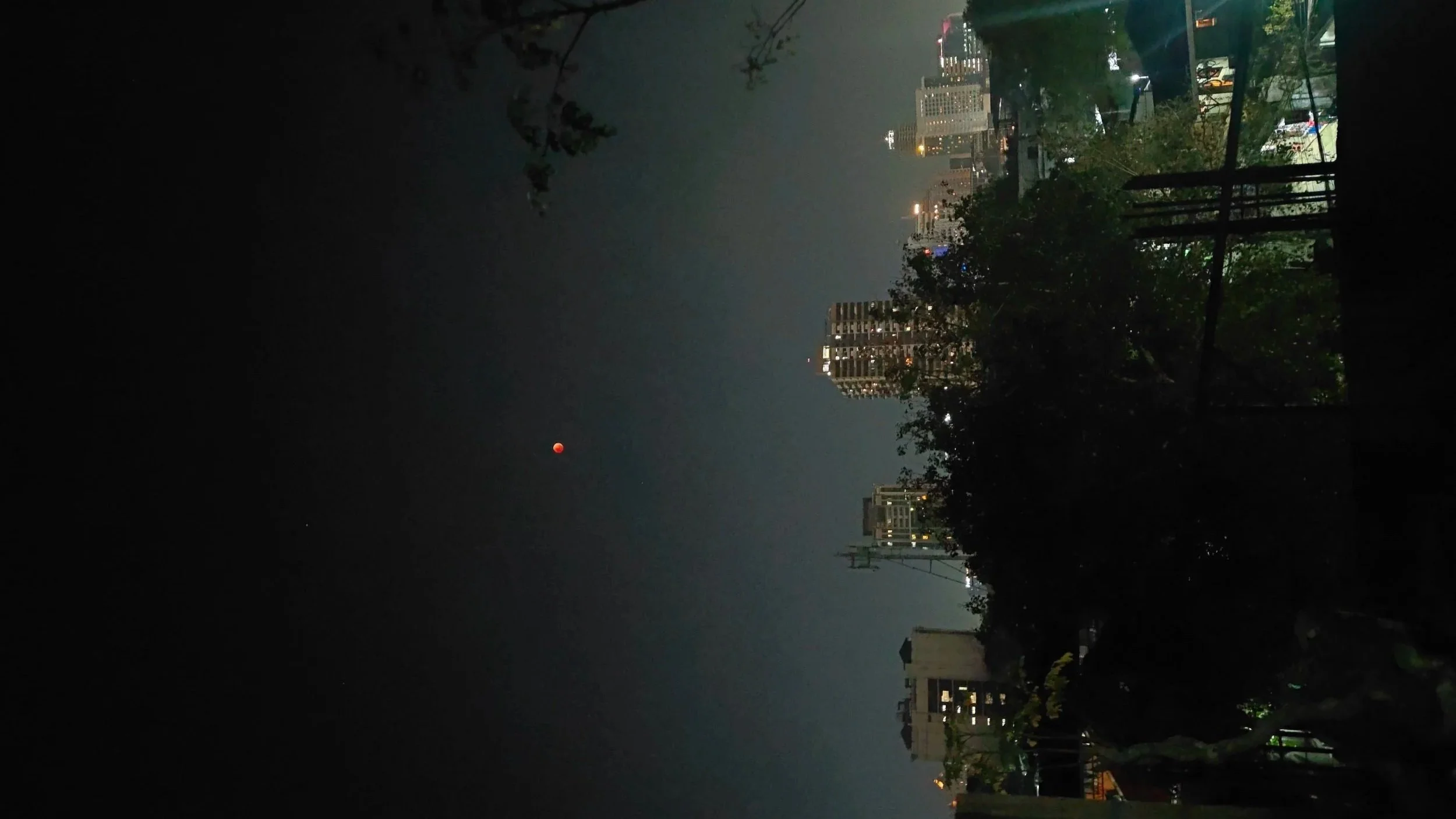
Lunar eclipse (Blood Moon) on March 3, 2026 at 7:33 PM overlooking the Cebu skyline
I often struggle with labels (char, not like that) for myself such as “creative entrepreneur”, “cultural-systems architect”, “multi-hyphenate designer”, or some other new-fangled term that comes up on the clearnet.
The one that I am fully claiming is a “post-colonial tropical futurist”.
I first encountered the term tropical futures through Nice Buenaventura’s work on Tropikalye and from the Tropical Futures Institute. Being a person from the National Capital Region, I grappled with the definition of my identity amidst a city that is desperately trying to shed its “3rd world”-ness to become a “world-class” capital.
This reflection came about from a post by the Lagori Collective (who I found through Index Space’s Node network) about a gathering entitled “Alt Economies”. The term itself came up in my discussions with ChatGPT when I would inquire about its speculations on the now AI-soaked future, and how the crystallization of wealth within the 1% would lead those of us who are being siphoned by the banking system to build alternative economies to survive. I’ve written quite a few disconcerted texts expounding how vulnerable we feel in the Steward part of our site.
This led me to an article entitled “Foresight Methods from Around the World” written by Cat Tully and Prateeksha Singh in the School of International Futures website, as well as discovering the Global Alliance of Territorial Communities. As a development worker, it was incredible to find international spaces that reflected my pursuit for a fairer future and made me quite hopeful that we aren’t alone in this immense mission.
Tackling decolonization is a difficult task as it asks one to integrate painful histories. My colonizer lineage has made itself far too prominent in my life, leaving a large question mark for me surrounding the term “native”. Untangling centuries of it to find active wounds in people’s stories of land displacement and ethnolinguistic discrimination is much like performing a complex surgery on the nerves of our collective metaphysical body, exposing deep cuts.
This is a topic we discuss in our first release of Kapanahonan, with an excellent introduction written by Carl Cervantes on “The ‘Manilafication’ of Philippine Culture”. This paves the way for the revelation of very sensitive but important facts in Mindanaon history that the Philippine government does not disseminate.
Post-colonialism is then equally difficult to tackle and deconstruct, as decolonization is a pre-requisite to it.
My experience of post-colonialism is one of constant frustration. Living in a nation lacking equitable infrastructure — with leaders taking national budgets for themselves as they justify such acts in the name of keeping up with the Global North — causes our biggest source of strife to dance before our faces. Millions of working-class citizens can only gripe as they watch their taxes pool into someone’s designer bag collection, videoed for Youtube and Tiktok.
In comparison, “first-world” nations live with convenience and ease. Sophisticated public infrastructure such as efficient transportation, free healthcare, and investment in the arts have those in the Global South scrambling to shed their passports and identities in order to integrate into these societies, not realizing how they were built on colonial extraction from their very birthplace.
When seeing all that with clarity, hopelessness attempts to sink its teeth deep into us.
We’re working hard to change that. Our survival depends on it, after all.
This is one of the many reasons why Balay Kasamtangan was born: so that we may have a physical space to explore what a tropical-informed fairer future looks like in a post-colonial technology-driven era.
26.03.26, 12:45 PM — Update
I was going through my Pinterest boards in search for a particular neon sign that said “support living artists” that was displayed in a cafe either somewhere in Luzon, or perhaps in another Southeast Asian country. While searching, I came across some old archives that I would like to share in this article for a dose of hopefulness and color.
Since I’ve made most of the systemic pages, I’m now free to make more artistic pages across this site. One of the first things I’d like to cover are the speculative thoughts and designs around what Tropical Futurism looks like. Here are some of my favorites from the board:
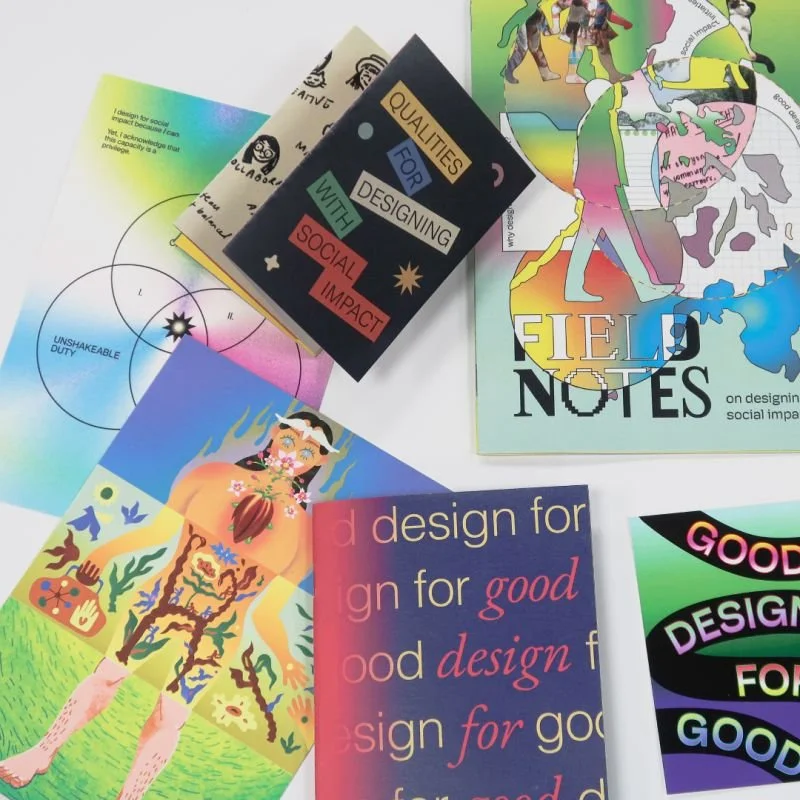
Field Notes on Designing for Impact
By Dapat Studio, formerly known as Works of Heart.
An archive zine that is no longer available. It seems that their shop is also temporarily closed, so their main homepage is hyperlinked instead.
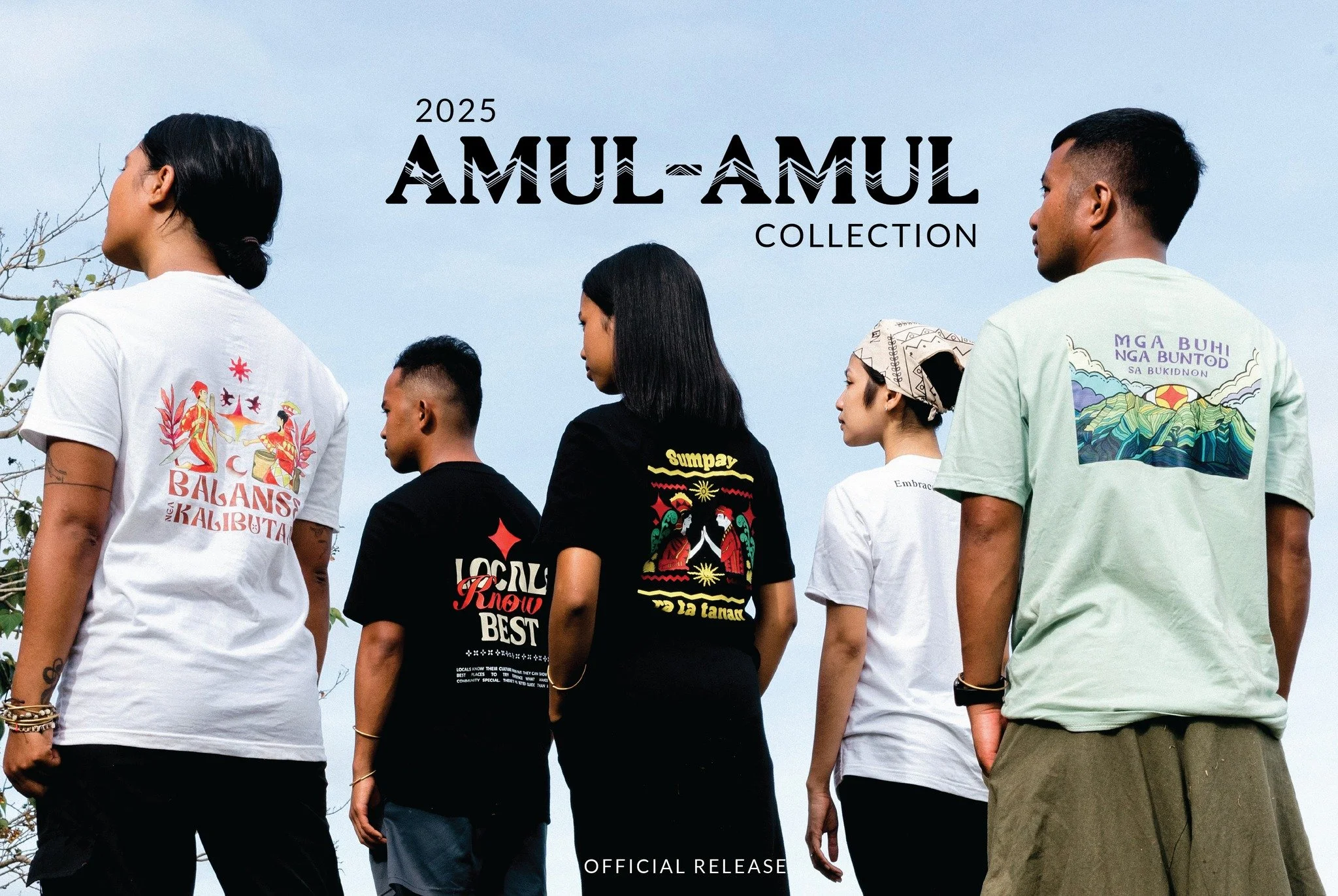
Amul-Amul collection by Proud Lumad
Some of the best graphic designers in Bukidnon that we’ve encountered. We’ve been trying to meet with Tomas, the founder of this collective, for a while now but always seem to miss each other. Featuring works of younger Lumad artists across the region, I’m always inspired by the way they bring Indi-genius (as we like call it) into contemporary ways.
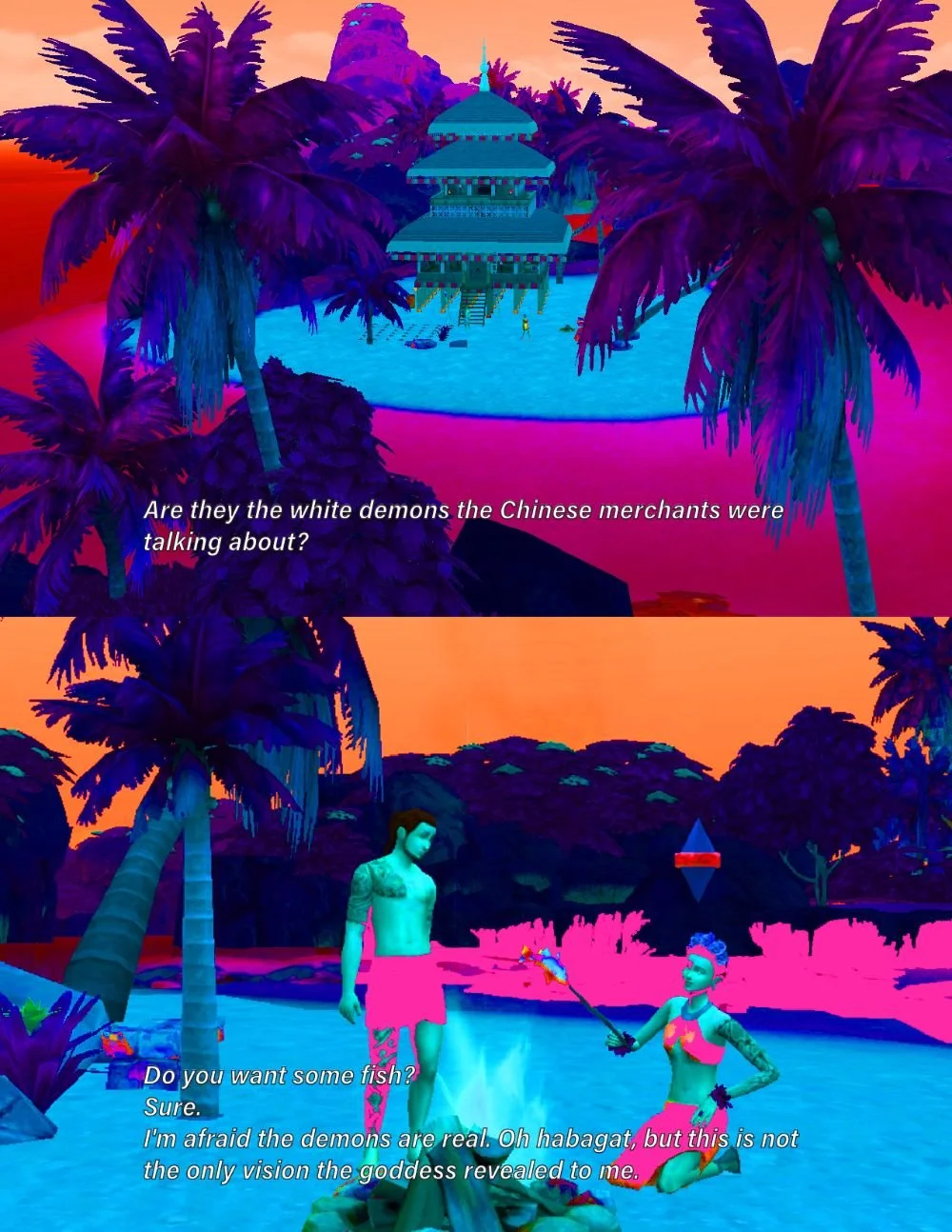
Excerpt from “The Trilogy of Saint Lazarus” by Isola Tong, interpreted by DLS-CSB School of Design and the Arts
This particular piece has been living rent free in my head for years. Everything about it, from the neon colors to the use of what seems to be the Sims game, captures the post-colonial experience, especially as a former American colony.
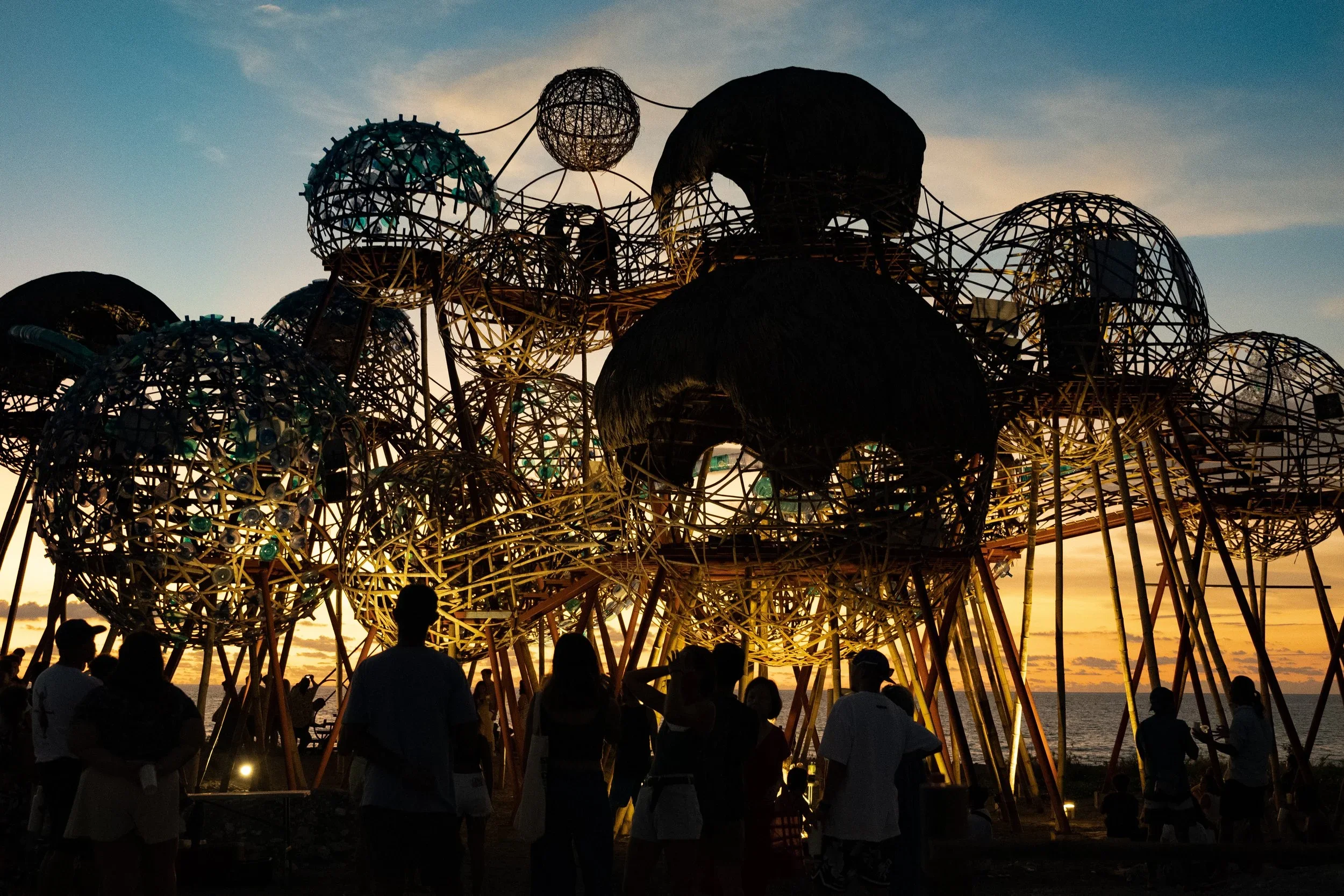
Mebuyan’s Vessel by Leeroy New
An icon situated in La Union depicting an interpretation of the multi-breasted Bagobo deity Mebuyan, who is also featured in Balaang Humayan’s Tô Págsallap Kató Álló Ka Dabó film. We actually reached out a while back to Leeroy to design a raincatcher and water filter for the main structure, though we have yet to get back in touch. Leeroy, if you’re reading this, please do give us a little more time to fundraise. I promise I’ll email as soon as we can.
Photo by Emerging Islands

Type63 font archive by Jo Malinis
This is the largest and most well-known resource for Philippine-produced fonts. Thousands of designers across the archipelago refer to this regularly, elevating the works of various type designers to prominence.
Image by Kanto Creative Corners
This list certainly isn’t exhaustive. My Tropical Futurism board carries a few hundred pins, but the larger Philippine Art board carries thousands more that I haven’t organized into their respective genres. That’s only a blip in the millions of works that exist online and offline, and I haven’t had the time to save newer works into the archive.
~ Nikki
